Best Exercises for Joint Health: Low Impact Workouts for Arthritis

Princess Eziolise
Galt Pharmaceuticals Fellow
Arthritis affects 21.4% of adults in the U.S with the most common being osteoarthritis (OA) and rheumatoid arthritis (RA).¹ While there are many different types of arthritis, a hallmark symptom is joint pain and inflammation. This joint pain and inflammation can be managed with nonpharmacological measures such as surgery, exercise, or physical therapy.² It can also be managed with pharmacological measures such as corticosteroids, topical counterirritants, or nonsteroidal anti-inflammatory drugs (NSAIDs) such as naproxen, tolmetin sodium, or topical diclofenac.²
While exercise provides immense health benefits, it might be daunting for patients who suffer from joint pain. Evidence has shown that exercise helps keep joints strong and flexible in addition to providing some pain relief.³ Engaging in exercise has shown little or no adverse effects and is considered safe for many forms of arthritis.³,⁴
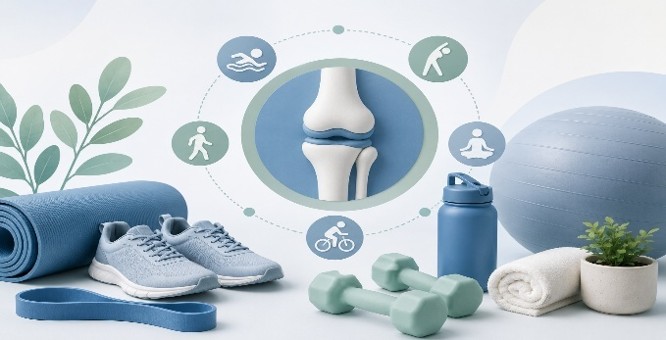
Here are some exercises that have demonstrated benefit in joint health while also being gentle on the joints:
- Aerobic exercise: Meta-analyses show that aerobic exercise is likely the best exercise for improving pain, function, gait performance, and quality of life in patients with knee OA.⁵ Aerobic exercises include walking, cycling, or water aerobics. Water provides resistance and lessens the weight on your joints. Walking waist-deep in water or swimming can be a great way to exercise while being easy on your joints.



- Strengthening exercise: Strengthening exercises can include the use of isokinetic weight machines, resistance exercise training with and without props such as elastic bands, and isometric exercise (e.g wall sits, low squats, planks e.t.c). Evidence suggests that these are especially beneficial in OA, RA, and axial spondyloarthritis.⁶



- Mind-body exercise: Tai Chi is a traditional Chinese mind-body exercise that is strongly recommended by the American College of Rheumatology/Arthritis Foundation guidelines as a holistic approach to improve joint strength, balance, and fall prevention.⁶ Research has also shown Tai Chi to be especially helpful in patients with OA.⁷ Locate a Tai Chi class near you with a knowledgeable instructor that will help you adapt these movements to your specific needs.

These exercises are associated with better outcomes when supervised or done in a group setting. There is no specified duration or frequency of exercise that is recommended for joint health. But a consensus for overall health benefit is at least 150 minutes of moderate-intensity aerobic exercise per week with strength training twice weekly.⁶ Moderate-intensity exercise means breathing harder than usual, but you can still talk.
You might feel some pain or stiffness after exercise, especially if you have not been active for a while. Listen to your body, and don’t push too hard. You can try shorter or less frequent sessions. Even during flares, it is important to keep your body moving.
References
- CDC/National Center for Health Statistics. FastStats - Arthritis. CDC. Updated December 11, 2025. Accessed July 13, 2026. https://www.cdc.gov/nchs/fastats/arthritis.htm
- Cleveland Clinic. Arthritis. Cleveland Clinic. Updated November 13, 2023. Accessed July 9, 2026. https://my.clevelandclinic.org/health/diseases/12061-arthritis
- Metsios GS, Kitas GD. Physical activity, exercise and rheumatoid arthritis: Effectiveness, mechanisms and implementation. Best Pract Res Clin Rheumatol. 2018;32(5):669-682. doi:10.1016/j.berh.2019.03.013
- Houghton KM, Macdonald HM, McKay HA, et al. Feasibility and safety of a 6-month exercise program to increase bone and muscle strength in children with juvenile idiopathic arthritis. Pediatr Rheumatol Online J. 2018;16(1):67. Published 2018 Oct 22. doi:10.1186/s12969-018-0283-4
- Yan L, Li D, Xing D, et al. Comparative efficacy and safety of exercise modalities in knee osteoarthritis: systematic review and network meta-analysis. BMJ. 2025;391:e085242. Published 2025 Oct 15. doi:10.1136/bmj-2025-085242
- Kolasinski SL, Neogi T, Hochberg MC, et al. 2019 American College of Rheumatology/Arthritis Foundation Guideline for the Management of Osteoarthritis of the Hand, Hip, and Knee. Arthritis Care Res (Hoboken). 2020;72(2):149-162. doi:10.1002/acr.24131
- Zhao A, Brown WJ, Coombes JS, Liu X. The effects of Tai Chi on pain and other health indicators in people with osteoarthritis: An updated systematic review and dose-response meta-analysis. Osteoarthritis Cartilage. 2025;33(8):933-950. doi:10.1016/j.joca.2025.05.013
Disclaimer
The information provided is for general informational and educational purposes only. It is not intended to serve as medical advice, diagnosis, or treatment. The content is written by a licensed pharmacist and reflects general knowledge and expertise in the healthcare field, but it is not a substitute for professional medical advice from a qualified healthcare provider.
Always consult your physician, pharmacist, or other qualified healthcare professional before starting, stopping, or modifying any medication, treatment, or health regimen. Individual health conditions and needs vary, and only a healthcare professional can provide personalized advice tailored to your specific situation.
While we strive to ensure the accuracy and currency of the information presented, medical knowledge is constantly evolving, and errors or omissions may occur. The blog's content does not cover all possible uses, precautions, side effects, or interactions of medications or treatments. Reliance on any information provided is solely at your own risk.
Links to external websites or resources are provided for convenience and do not imply endorsement or responsibility for their content.